
Project Overview
Many commercial buildings still operate with older single pane or early generation double pane glazing, with poor airtightness measures, resulting in higher HVAC loads and energy costs and reduced comfort. Full window replacements can improve performance but are often disruptive and costly.
This project, jointly funded by the California Energy Commission (CEC), Southern California Gas Company and Northwest Energy Efficiency Alliance, evaluates and supports multiple commercial SWS solutions through laboratory validation, techno economic analysis, real world field demonstrations, and market transformation work. The effort is being led by GTI Energy, with Lawrence Berkeley National Laboratory (LBNL) and Frontier Energy as key partners.
Secondary Window Systems (SWS) provide an alternative path to full window replacement. These systems are mounted to the existing frame, on the interior or exterior, creating a multi-layer, high performance assembly without removing the original window. They reduce unwanted heat transfer and infiltration, improve comfort, and offer a more cost-effective retrofit option.
Project Goals
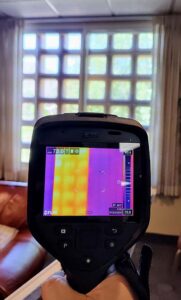 The project aims to determine how commercially available and emerging SWS products can reduce energy use, improve occupant comfort, and provide a cost-effective alternative to Title 24 compliant double-pane window replacements. The team is generating technical evidence, market insights, and product improvements that help manufacturers, building owners, and policymakers adopt these systems with confidence.
The major goals are to:
- Characterize the commercial window retrofit market
Understand existing glazing conditions across building types, climate zones, and retrofit pathways. - Evaluate technical and cost performance of SWS solutions
Compare SWS assemblies to Title 24 replacement windows using modeling, installed cost data, and manufacturer input. - Advance and demonstrate multiple SWS technologies
Evaluate triple pane and vacuum insulated SWS, model thermal/optical performance, and explore design improvements. - Validate performance through laboratory and field testing
Assess SWS performance under controlled laboratory conditions and via field-testing in a large commercial building. - Quantify market and energy impacts
Evaluate statewide potential, cost effectiveness, code compliance pathways, and barriers to adoption. - Support commercialization and technology transfer
Share results with industry, utilities, and policy stakeholders; provide documentation and tools to support market deployment.
Key Tasks
- Technology Assessment & Market Characterization: Screening of current and emerging retrofit options, development of a statewide SWS technology database, and mapping of market potential.
- Techno‑Economic Assessment: Comparison of SWS costs to Title 24 full window replacement.
- Laboratory Validation: Thermal testing, optical measurements, air leakage assessment, and condensation resistance index for SWS.
- Field Demonstration: Installation of SWS in a large commercial site and long-term performance monitoring.
- Market Transformation Analysis: Energy modeling across multiple climate zones, Title 24 comparison, cost‑effectiveness evaluation, and identification of priority building sectors.
- Benefits Evaluation & Technology Transfer: Documentation of energy savings, GHG impacts, commercialization indicators, and outreach materials for industry partners and stakeholders.
Learn More
Contact the energy experts today