Uncategorized
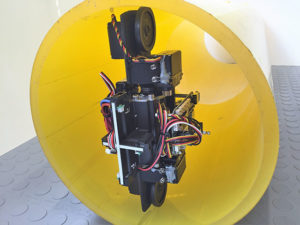
The versatile PipeRider technology can enable safer, faster, and more efficient pipeline inspection at lower cost, using cameras for visual inspection and anomaly detection. There are about 2.6 million miles of natural gas pipeline in the U.S., often located in high consequence areas under older cities like Boston, where access for inspection is challenging. In-Line…

A side-by-side assessment of a gas engine heat pump (GHP) and electric cold climate heat pump for heating/cooling compared to an existing conventional HVAC system has been completed at Naval Station Great Lakes. Variable refrigerant flow (VRF) heat pump systems provide space conditioning for multi-zone commercial buildings. The demonstration included a measured field performance evaluation…
At the U.S. Army Garrison Presidio in Monterey, California, three dishroom technologies-waste water heat recovery, an advanced ventilation system, and a low water usage warewasher-were integrated to demonstrate and quantify energy and water savings. The demonstration of this high-efficiency commercial food service dish machine produced noteworthy results including 51% gas savings, 41% electricity savings, and…
With funding from DOE, GTI is testing large-scale hydrogen production using natural gas in a modular hydrogen generator that inherently captures the CO2 at pipeline quality. The technology has applications in clean power and enhanced oil recovery (EOR). GTI has piloted a hydrogen production process with an inherent capability for carbon dioxide (CO2) separation. This…

GTI has technology platforms to remove sulfur from natural gas mid-stream that offer advantages in capital cost, operations and maintenance cost, and footprint. SR2 is an integrated multi-contaminant removal process that incorporates acid gas removal, sulfur recovery, and tail gas treating in one step. Preliminary process performance and economics suggest a 40% cost savings compared…
The practices described by this website have improved comfort and saved the owners of existing homes between 40 and 60% of their annual heating and cooling costs, while providing a fair profit for the contractors who do the work. These are not estimates. They are the measured reductions in the annual utility bills of real…
GTI has established a Gas Quality Resource Center (GQRC) to provide a common understanding and knowledge base about critical issues surrounding gas quality, interchangeability, and potential implications from the introduction of new supply sources into gas transmission and distribution systems. This centralized knowledge base encompasses extensive data resources and serves as a clearinghouse for information that…
Developing energy efficiency solutions for residential housing A vision document, Natural Gas in a Smart Energy Future, sponsored by the American Gas Foundation, APGA Research Foundation, Canadian Gas Association, the INGAA Foundation Inc. and the Natural Gas Supply Association, was created by a GTI/Navigant Team in 2011. The report defines the ‘smart’ and ‘strategic’ roles…
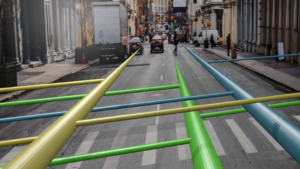
Broadband Electromagnetic (BEM) technology offers a cost effective method for direct assessment evaluations through traditional excavations as well as keyhole openings. Researchers have developed a Full Encirclement Unit (FEU) using BEM sensors to measure wall loss on metal piping without the need to remove the coating. This new examination tool can enable internal and external…
GTI associates, with funding from OTD, are collaborating closely with colleagues at SENSIT Technologies to bring new hardware that reduces O&M costs to market. The handheld acoustic-based pipe locator, named the Ultra-Trac® APL, is used to detect and locate both metallic and nonmetallic buried gas and sewer pipes prior to excavations and construction to reduce potential damage…
- « Previous
- 1
- 2
- 3
- 4
- Next »