Uncategorized
tcbiomass+2026 Call for Papers: Abstracts Due March 31, 2026 Researchers and technology developers are invited to share insights and latest developments on the bioeconomy and advanced biomass conversion. February 4, 2026 Des Plaines, IL GTI is pleased to announce a Call for Papers for tcbiomass+2026, the leading international conference on thermochemical (TC) biomass conversion science.…
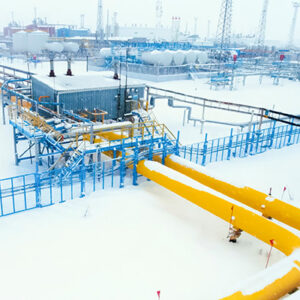
24/7 Access | Resource Material
Overview: This useful 94-page manual, delivered as a PDF download, is designed to give a better understanding of gas and LNG processes

24/7 Access | Resource Material
Overview: This useful 94-page manual, delivered as a PDF download, is designed to give a better understanding of gas and LNG processes.
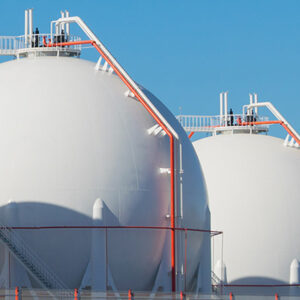
24/7 Access | Online Self-paced
Course Overview: This online course provides the training needed for LNG plant operators to meet U.S. DOT training requirements. This version of the course is for users who have already completed the course but now need to be recertified.
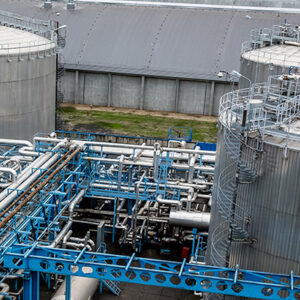
24/7 Access | Recorded Webinar
Course Overview: This webinar series will equip participants with fundamental knowledge concerning small-scale LNG projects, markets, and technical fundamentals.

Onsite | Custom Training
Course Overview: Learn new trends and applications in LNG markets, pricing, contracts, gas supply, project economics and business models, LNG shipping, liquefaction and regasification technologies…and more.

Onsite | Custom Training
Course Overview: This course provides a thorough understanding of terminal operations in the context of the global LNG industry.

24/7 Access | Online Self-paced
Course Overview: This online course provides an understanding of what’s involved in loading, docking, and unloading a ship carrying LNG. Security and safety are emphasized.
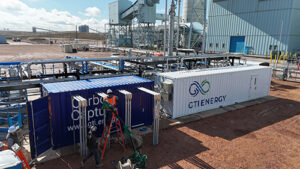
GTI Energy is collaborating with the U.S. Department of Energy National Energy Technology Laboratory (DOE-NETL), the Ohio State University (Ohio State) and other partners to develop and scale up a CO2 capture process based on novel, transformational membrane technology. The $21 million project comprises fabricating facilitated transport membranes (FTM) and membrane modules, designing and building…
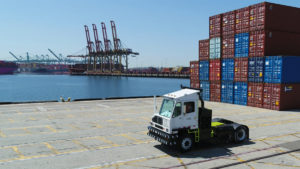
GTI Energy and partners designed and assembled two new zero-emissions fuel cell-electric terminal tractors and assessed their operation in a demanding, real-world cargo-handling application at the Port of Los Angeles. Zero Emissions for California Ports (ZECAP) is a first-of-a-kind pilot project that verified the performance of heavy-duty terminal tractors (also called yard trucks) and evaluated…